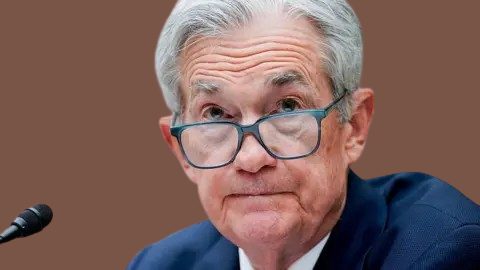
The discussion from the CTV News segment reflects the intense anticipation surrounding Federal Reserve Chair Jerome Powell’s Jackson Hole speech on August 22, 2025, and its implications for monetary policy, particularly interest rate cuts, and investor sentiment. Below, I analyze the latest data and sentiments expressed in the segment, incorporating insights from recent sources to provide a comprehensive view of the economic landscape, the potential for rate cuts, and their impact on markets and the broader economy.

Context: Jackson Hole Speech and Federal Reserve Policy
The Jackson Hole Economic Symposium, hosted annually by the Federal Reserve Bank of Kansas City, is a high-profile event where central bankers, economists, and policymakers discuss critical economic issues. Jerome Powell’s 2025 speech, expected to be his final one as Fed Chair (with his term ending in May 2026), was closely watched for signals about the Federal Reserve’s monetary policy, particularly whether it would resume interest rate cuts at its September 16-17, 2025, meeting. The Fed’s benchmark interest rate has remained unchanged at 4.25%-4.50% throughout 2025, following a series of cuts in late 2024 (50 basis points in September, 25 basis points in November, and 25 basis points in December). The CTV News discussion captures the debate over whether a rate cut is necessary and how Powell’s remarks might influence investor sentiment and economic outcomes.
Key Points from the CTV News Discussion
- Expectations for Powell’s Speech:
- The panelists express skepticism about Powell delivering a “super dovish” speech or a politicized defense of Fed independence, despite pressure from the White House to lower rates. Josh Brown suggests Powell will aim to “cool the political temperature” while providing enough dovish signals to support markets without committing to specific actions. This aligns with sources indicating Powell avoided explicitly endorsing a September rate cut but signaled openness to adjusting policy due to a shifting balance of risks.
- The discussion highlights Powell’s focus on the Fed’s dual mandate—maximum employment and stable prices—amid rising job market risks and persistent inflation pressures from tariffs. This cautious approach is consistent with Powell’s remarks, where he noted, “The stability of the unemployment rate and other labor market measures allows us to proceed carefully as we consider changes to our policy stance.”
- Need for Rate Cuts:
- Josh Brown argues that rate cuts are not critical for stock market performance, as markets have rallied without cuts in 2025. He notes that the Russell 2000 and mid-cap stocks have outperformed the S&P 500 since April 9, 2025, suggesting a market-wide recovery driven by broader economic factors rather than monetary policy alone. Malcolm agrees, stating that rate cuts are not essential for the AI-driven “Magnificent Seven” stocks (e.g., Microsoft, Amazon, Alphabet), as these companies do not rely on borrowing for expansion.
- However, Brown emphasizes that rate cuts are crucial for the housing market, where high interest rates (fed funds in the high 4% range) have suppressed activity. He argues that lower mortgage rates would boost liquidity and turnover in residential real estate, benefiting the middle class, whose wealth is primarily tied to homeownership (55% of households cite their home as their largest asset). This view is supported by Redfin’s data, cited in the discussion, showing homebuyers walking away from purchases at record rates due to high rates.
- Investor Sentiment and Market Dynamics:
- The panelists describe the current market as in a “consolidation and reshuffling of leadership” rather than a pause or pullback. Jenny notes that sectors like healthcare and consumer staples are gaining traction (up 5% month-to-date), while technology stocks are flat or down slightly, reflecting a shift in market leadership. She cites Goldman Sachs data showing healthcare valuations at historic lows compared to their 30-year average, suggesting room for growth in undervalued sectors.
- The discussion also highlights the significance of upcoming corporate earnings, particularly Nvidia’s, as a key driver of market sentiment. Brown suggests that Nvidia’s earnings report, expected the week following Jackson Hole, will be more critical for sustaining the market rally than Powell’s speech.
- Tariff Concerns:
- The panel references ongoing concerns about tariffs, with companies like Walmart and Estee Lauder flagging their impact on consumer prices. Powell’s speech acknowledged that “significantly higher tariffs across our trading partners are remaking the global system,” contributing to inflation risks. This aligns with recent data showing the Personal Consumption Expenditures (PCE) index, the Fed’s preferred inflation gauge, rising from 2.1% in April to 2.6% in June 2025, above the Fed’s 2% target.
Latest Data and Insights from Sources
- Economic Indicators:
- Labor Market: The July 2025 jobs report showed only 73,000 jobs added, well below the 110,000 expected, with downward revisions of 258,000 jobs for May and June. The three-month average job growth fell to 35,000, signaling a sluggish labor market, and the unemployment rate rose to 4.3%. A preliminary Bureau of Labor Statistics estimate indicates a downward revision of 818,000 to March 2024 nonfarm payrolls, to be finalized in February 2026. These data points fueled expectations for rate cuts to support employment.
- Inflation: Inflation remains above the Fed’s 2% target, with the PCE index at 2.6% in June 2025. The Consumer Price Index (CPI) and Producer Price Index (PPI) also indicate mild tariff-driven price increases, with services inflation heating up in July. Powell noted that “risks to inflation are tilted to the upside,” complicating the case for rate cuts.
- Housing Market: High interest rates have stifled housing activity, with existing home sales at historic lows. Mortgage rates, tied to the Fed’s benchmark rate, remain a barrier to affordability and turnover, supporting Brown’s argument for rate cuts to stimulate liquidity.
- Powell’s Jackson Hole Speech (August 22, 2025):
- Powell signaled a possible rate cut at the September 16-17 meeting, stating, “With policy in restrictive territory, the baseline outlook and the shifting balance of risks may warrant adjusting our policy stance.” He highlighted rising downside risks to employment and persistent inflation pressures from tariffs and immigration policies. However, he stopped short of committing to a cut, emphasizing a data-driven approach.
- Markets reacted positively, with the S&P 500 rising 1.5%, the Nasdaq Composite up 1.9%, and the Dow Jones Industrial Average jumping nearly 2% to a record intraday high. The two-year Treasury yield fell to 3.69%, and the probability of a 25-basis-point cut in September rose from 70% to 80% post-speech, per LSEG data.
- Investor Sentiment:
- Posts on X reflect mixed expectations before the speech, with some anticipating a dovish tone to support markets and others warning of a hawkish stance due to inflation concerns. After the speech, sentiment shifted toward optimism, with users noting Powell’s dovish signals and the removal of “effective lower bound” language from the Fed’s policy framework, indicating flexibility.
- Sources like Reuters and The New York Times report that investors cheered Powell’s remarks but remain cautious about stagflation risks (sluggish growth paired with high inflation). The market’s rally post-speech suggests confidence in a potential rate cut, though some analysts, like Drew Matus of Metlife Investment Management, warn that inflation may persist, limiting the Fed’s ability to cut aggressively.
- Tariff and Policy Impacts:
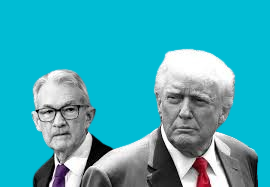
- Powell’s speech acknowledged the economic uncertainty caused by “sweeping changes” in trade, immigration, and tax policies, particularly under President Trump’s administration. Tariffs are driving inflation, while tighter immigration policies have slowed labor force growth, contributing to a “curious kind of balance” in the labor market where both supply and demand are weakening.
- The Fed’s July 2025 meeting minutes revealed that most policymakers favored holding rates steady due to tariff-driven inflation risks, though Governors Michelle Bowman and Christopher Waller dissented, advocating for a 25-basis-point cut to address labor market weakness.
Critical Analysis: Do Markets and the Economy Need a Rate Cut?
- Stock Market Perspective:
- The CTV panelists argue that the stock market does not urgently need a rate cut to sustain its rally. The S&P 500, Nasdaq, and Russell 2000 have shown resilience, with the latter outperforming since April 2025, driven by broader market participation and strong earnings from tech giants. The “Magnificent Seven” companies, which dominate the AI sector, are cash-rich and less sensitive to interest rates, as Malcolm notes.
- However, the market’s reaction to Powell’s speech—sharp gains across major indices—suggests that investors remain sensitive to Fed signals. The anticipation of a 25-basis-point cut in September boosted sentiment, particularly for rate-sensitive sectors like small-cap stocks (Russell 2000 up over 3%). This indicates that while cuts may not be essential, they can amplify market momentum.
- Housing Market and Middle-Class Wealth:
- Brown’s emphasis on the housing market as a key driver for rate cuts is well-founded. High interest rates have frozen housing activity, with existing home sales at multi-year lows and homebuyers abandoning purchases at record rates, per Redfin. Lowering rates could reduce mortgage costs, increase turnover, and unlock wealth for the 55% of households whose primary asset is their home.
- This aligns with broader economic data showing that high rates are disproportionately affecting Main Street, while Wall Street benefits from AI-driven stock gains. A rate cut could bridge this gap, supporting middle-class economic stability without necessarily fueling inflation, as Brown argues that a 50-basis-point cut is unlikely to be “calamitous” for price stability.
- Inflation and Stagflation Risks:
- The Fed faces a delicate balancing act, as Powell noted in his speech. Inflation remains above the 2% target, driven by tariffs and services sector pressures, while the labor market shows signs of fragility. The risk of stagflation—highlighted by Reuters and Metlife’s Drew Matus—complicates the case for aggressive cuts, as lower rates could exacerbate price pressures.
- Powell’s cautious tone reflects this tension, emphasizing data dependence and the need to monitor incoming jobs and inflation data, such as the July PCE report (due August 29, 2025) and the August CPI. The Fed’s decision to hold rates steady in July, despite dissent from two governors, suggests a preference for caution until tariff impacts are clearer.
- Investor Sentiment and Market Leadership:
- Jenny’s observation of a “reshuffling of leadership” is supported by market data showing healthcare and consumer staples outperforming technology in August 2025. This shift reflects investors seeking value in undervalued sectors, as healthcare valuations are at historic lows. However, the sustainability of this rotation depends on broader market catalysts, such as Nvidia’s earnings, which could either reinforce tech dominance or signal further diversification.
- The market’s positive response to Powell’s speech suggests that investors are pricing in a dovish policy shift, but the tempered expectations (e.g., 80% probability of a 25-basis-point cut rather than 50) indicate caution about aggressive easing. The focus on Nvidia’s earnings underscores the market’s reliance on AI-driven growth, which may overshadow monetary policy in the near term.
Recommendations for Investors and Policymakers
- Investors:
- Diversify Portfolios: Given the potential shift in market leadership, investors should consider exposure to undervalued sectors like healthcare and staples, which may benefit from consolidation and lower rates. However, maintaining positions in AI-driven tech stocks remains critical, pending Nvidia’s earnings.
- Monitor Economic Data: Key reports, such as the July PCE (August 29) and August jobs data, will influence the Fed’s September decision. Investors should watch these for signs of labor market weakness or persistent inflation.
- Prepare for Volatility: The uncertainty around tariffs and Fed policy could lead to choppy markets. Investors should hedge against potential pullbacks, especially if Nvidia’s earnings disappoint or inflation data surprises to the upside.
- Policymakers:
- Balance Dual Mandate: The Fed should prioritize data-driven decisions, weighing labor market risks against tariff-driven inflation. A 25-basis-point cut in September appears likely and could support employment without significantly fueling inflation.
- Address Housing Market: Lowering rates to stimulate housing activity would benefit the middle class, as Brown suggests. The Fed could signal a gradual easing cycle to boost liquidity without destabilizing prices.
- Maintain Independence: Powell’s emphasis on data-driven policy underscores the importance of Fed independence amid political pressures. Clear communication about the rationale for rate decisions can mitigate market uncertainty.
Conclusion
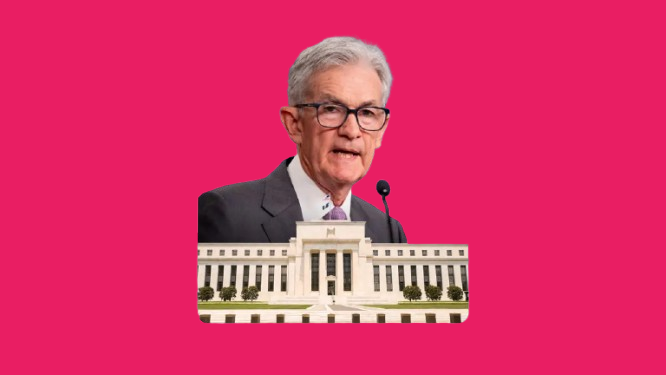
Jerome Powell’s Jackson Hole speech on August 22, 2025, signaled a potential rate cut in September, boosting investor sentiment and driving a market rally (S&P 500 +1.5%, Nasdaq +1.9%, Dow +2%). While the CTV panelists argue that rate cuts are not essential for stock market performance, they highlight the critical need for lower rates to stimulate the housing market and support middle-class wealth. The Fed faces a complex environment, with a weakening labor market (73,000 jobs added in July, unemployment at 4.3%) and persistent inflation (PCE at 2.6% in June) driven by tariffs. Investor sentiment remains optimistic but cautious, with focus shifting to upcoming catalysts like Nvidia’s earnings. The Fed’s data-dependent approach, as emphasized by Powell, will be crucial in navigating these challenges, balancing employment and inflation risks while addressing Main Street’s economic needs.